
Can Your RV Solar Power System Handle Boondocking? What to Check Before You Go Off-Grid
Boondocking is one of the most rewarding ways to travel in an RV. You get quiet campsites, open skies, and the satisfaction of being completely self-sufficient. Still, going off-grid means your RV has to supply all your power on its own. Your solar panels, batteries, and wiring become the backbone of your entire setup once you disconnect from shore power. A quick check before your trip can help you avoid dead batteries, slow charging, or unexpected power shortages that can cut your adventure short.
The moment you park in a remote spot, your electrical needs change. Everything you rely on runs from the same limited energy supply. Lights, a fridge, water pumps, fans, and chargers all draw from the power you produce during the day. When your equipment is clean, healthy, and configured correctly, boondocking feels simple and stress free. When it is not, the smallest issue can turn into a real inconvenience.
Why Solar Prep Makes a Difference Off-Grid
A reliable system is essential because your RV solar power system becomes your main source of electricity. Your panels must gather enough energy during the day to keep your batteries full, and your batteries must store that power until you need it. If either part of the system runs at less than full strength, you notice the effects quickly.
The U.S. Department of Energy notes that solar panels perform better when they are kept clean and free of debris. They also highlight the role shading plays in reducing output, which is why trimming nearby trees is recommended for homeowners. The same principles apply to RV owners. Clean, unobstructed panels help your system run more efficiently, especially when you are off-grid and depending solely on the sun.
Start by Checking the Condition of Your RV Solar Panels
Your RV solar panels are the first thing to look at when preparing for boondocking. Dust, grime, or shading from rooftop accessories can reduce how much energy they produce. Cleaning the panels with a soft cloth and looking for any surface damage helps you make sure they are ready for the trip. If your panels are older or have been sitting through the off-season, it may be worth having them tested to confirm they are still producing at their rated output.
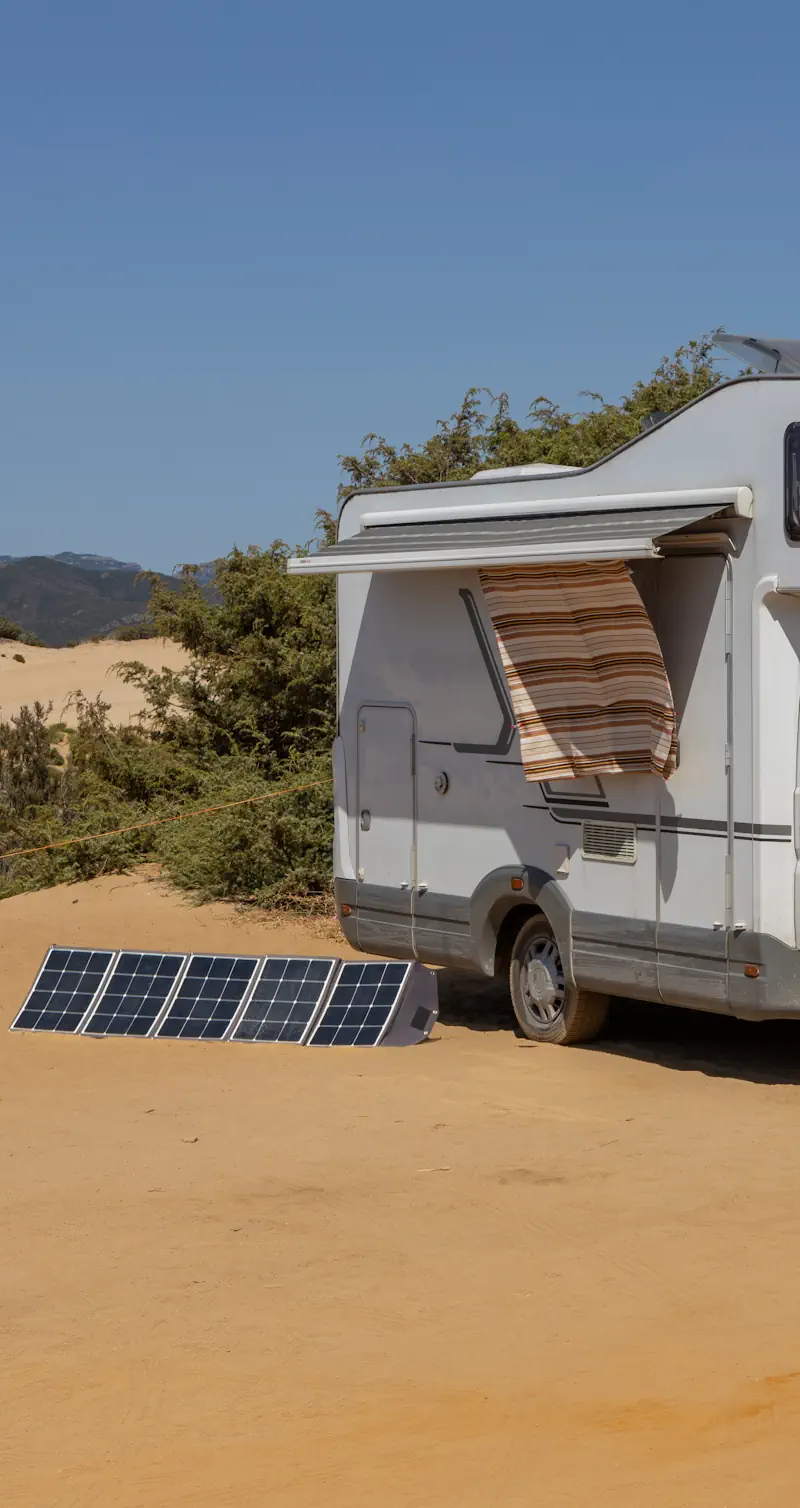
Some RV owners bring portable RV solar panels when they camp off-grid. These panels can be placed directly in the sun and moved throughout the day, which helps when your RV is parked under partial shade or when clouds roll in. Bringing portable panels is a simple way to supplement your main system without making permanent changes to your roof. If you feel like your system is barely keeping up, upgrading to a larger RV solar kit or adding more panels can make your next trip much more comfortable.
Evaluate Whether Your Batteries Can Support a Night Off-Grid
Even if your panels collect plenty of solar energy during the day, your boondocking experience depends heavily on how well your batteries store that power. Healthy batteries should charge fully during the day and hold that energy through the night. When batteries age or begin to fail, you may notice slow charging, faster voltage drop, or more difficulty keeping appliances running.
Many travelers prefer lithium batteries for boondocking because most manufacturer data and solar-storage guides show that lithium chemistry usually offers higher usable capacity and faster charging compared to traditional lead acid options. Lithium batteries are also typically rated for far more charge and discharge cycles over their lifetime. For example, Battle Born’s spec sheet for its 100Ah 12V LiFePO₄ battery lists an expected cycle life of 3,000 to 5,000 cycles, which gives RV owners significantly more usable energy over the long term than many lead acid batteries. Lead acid batteries still work well in many RV setups, but they provide less usable capacity and tend to wear out sooner if they are frequently cycled or regularly discharged too deeply.
If you are unsure whether your battery bank is strong enough for the way you camp, a quick capacity test can give you a clear answer before you head out.
Review Your Charge Controller Settings
Your charge controller plays an important role in regulating how solar energy flows into your batteries. If the settings are incorrect or if the controller is too small for your system, your batteries may charge slowly or inconsistently. Before your trip, it helps to check that your controller is programmed for your specific battery type. Lithium batteries, for example, require different charging parameters than lead acid batteries.
If you recently added more RV solar panels or upgraded to a larger RV solar kit, the charge controller must be able to handle the additional wattage. When a controller is undersized, it creates a bottleneck that limits how much power reaches your batteries. Watching the system’s readings over a few sunny days can help you spot issues early. Sudden voltage spikes, odd fluctuations, or unusually low charging numbers may signal a problem that needs attention.
Check Wiring, Fuses, and Electrical Connections
RVs experience constant movement, and over time this can loosen electrical connections or cause wiring to wear down. Loose or corroded connections create voltage drops that reduce how much solar energy reaches your batteries. This is something you may not notice right away, but it can cause real problems once you are boondocking.
A quick inspection goes a long way. Look at the wires coming from your panels, the fuses between components, the connections on your charge controller, and the terminals on your battery bank. If anything looks discolored, frayed, or loose, it is better to handle the repair before your trip. Some RV owners upgrade to heavier gauge wire when expanding their system because thicker cables help reduce energy loss and improve overall efficiency.
Test Your Energy Use Before the Trip
One of the best ways to prepare for boondocking is to simulate a night off-grid at home. Turn off shore power and use your RV normally. Run your lights, fans, fridge, chargers, and anything else you typically rely on. Then see how your batteries look the next morning and how long it takes for your panels to recharge them.
This test gives you a clear picture of your real energy needs. It also shows whether your system is producing enough power each day to keep up with your lifestyle. If your batteries drain faster than you expected or if your panels struggle to recharge them, you will know ahead of time instead of discovering the issue in the middle of a trip. Small adjustments like switching to LED lighting or using propane appliances can make a noticeable difference when you are off-grid.
Getting Your RV Ready for Your Next Trip
Preparing your RV solar system for boondocking helps you relax and enjoy your trip without worrying about power. When your panels, batteries, wiring, and controller are tuned and working together, your RV becomes a comfortable and reliable off-grid home. A little preparation makes remote camping feel simple, even when the nearest hookup is miles away.
For a solar inspection, repair, or upgrade before your next boondocking trip, visit Hi-Tech RV Service. We proudly serve RV owners from Pueblo to Boulder, Colorado.